
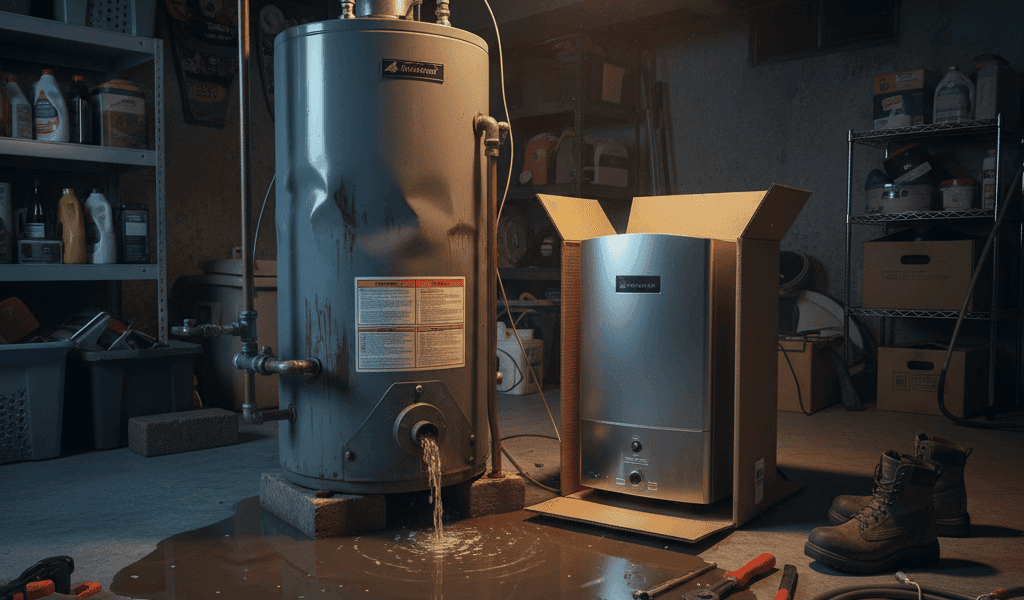

Most homeowners do not think about their hot water system until a shower goes cold or a faucet starts to drip rusty water. That sudden need is an expensive surprise in many cases. Knowing when to replace a water heater saves money over time and keeps daily routines on track.
This article lays out clear signs that point to replacement, how age and construction affect lifespan, safety concerns to watch for, and steps to take when you are ready to upgrade. You will find practical tips and examples that make it easier to decide whether to repair or replace a unit.
Common signs to watch for that mean a water heater needs replacement
Several symptoms tend to show up before a full failure. If you notice one or more of these issues take action sooner rather than later.
- Age of the unit Older tank models often perform well for about 8 to 12 years. If the heater is within or past that range start planning for replacement.
- Rusty or discolored water Brown or rusty water coming from hot taps often points to internal corrosion. A corroded tank can leak without warning.
- Strange noises Popping or rumbling sounds usually mean sediment has built up on the bottom of a tank. This reduces efficiency and can cause overheating.
- Not enough hot water Short showers or fluctuating temperatures are signs the capacity has diminished or a key component is failing.
- Frequent repairs When service calls become regular, replacement may cost less in the long run than repeated fixes.
- Visible leaks Any wetness around the base of a tank usually indicates a breach. Leaks require immediate attention and often mean replacement is the logical step.
How age and tank type affect how soon replacement is needed
Time on the job is the single most useful metric for predicting failure. Different technologies age at different rates and have unique failure modes.
Traditional tank heaters
Standard storage tanks store hot water at a set temperature. These units typically last 8 to 12 years depending on water quality and maintenance. Hard water and little to no flushing shorten life span. A simple annual drain to remove sediment can extend performance, although eventual replacement is likely.
Tankless units
Tankless models tend to last longer, often 15 to 20 years, because they do not hold water that can corrode a tank. They still have components such as heat exchangers and burners that may wear out. If a tankless unit starts to cycle incorrectly or fails to meet peak demand it may be time to look at an upgrade.
Leaks rust and mineral buildup explained
Understanding what is happening inside your heater helps explain why replacement is sometimes the best option. Two common internal problems are corrosion and mineral deposition.
- Corrosion Corrosion begins at the metal surfaces that contact water. Many tanks include a sacrificial anode rod that slows corrosion. When that rod is depleted the metal of the tank itself begins to corrode. Once corrosion advances through the tank wall a leak follows and replacement is needed.
- Mineral buildup Sediment from hard water settles at the bottom of storage tanks. Over time this layer insulates the water from the burner or heating element which results in longer run times and higher energy use. The stress of uneven heating can crack elements and reduce tank life.
Tip for longevity: If your plumbing uses hard water schedule tank flushing at least once per year and have the anode rod checked every few years. These steps lower the chance of sudden failure.
Performance problems that point to replacement
Not every problem needs a full swap out. Some issues are simple and inexpensive to repair. Replacement becomes the practical choice when performance drops significantly or fixes are frequent.
- Slow recovery times If the heater cannot keep up with normal household use more than one repair may be avoided by moving to a larger capacity model or a tankless system.
- Inconsistent temperature When hot water alternates between scalding and cold this often signals failing thermostats or elements. Multiple component failures are a clear reason to consider replacement.
- Rising energy costs Older models often use more fuel to do the same job. If utility bills rise without a change in consumption replacement with a modern unit can lower operating expenses.
Safety and efficiency reasons to consider replacement
Safety is a major factor in the replacement decision. A heater that is corroded or leaking poses water damage risk and in some cases can create hazardous conditions.
Gas water heaters that show flame instability soot or unusual odors should be inspected promptly. Electrical heaters with repeated element failures or burn marks on wiring require immediate attention. Modern units also offer energy saving performance and features that older models lack. Upgrading can give a household dependable hot water and lower monthly operating costs.
What to expect during a water heater replacement process
Replacing a water heater is a fairly routine project for licensed plumbers. The process includes removal of the old unit safe disposal and installation of the new unit with proper connections to venting gas or electrical work and water lines.
The first step is a site assessment where a technician confirms capacity needs fuel type and any special installation constraints. If you want a like for like swap the process can often be completed in a single day. If you switch to a different technology such as tankless additional modifications to gas lines or venting may be required.
When planning the job ask your service provider about warranties expected lifespan and any permits needed for the work. For a professional approach to water heater replacement search for technicians who can show proof of license insurance and local permit handling.
Choosing the right size and fuel type
Selection depends on household size hot water usage and available utilities. For tanks the usual guide is gallons per person but family routines matter. Morning showers and dishwasher loads at the same time demand higher recovery. For tankless models look at flow rate measured in gallons per minute and make sure it matches peak demand.
Cost factors and long term savings
Replacement cost varies by unit type capacity labor complexity of installation and regional pricing. A simple tank swap is the lowest price option. Switching to a high capacity tank or converting to tankless will add material and labor costs.
- Upfront cost Basic tanks are the most affordable to buy and install. Tankless systems carry higher initial cost but often lower operating costs over time.
- Operating cost Fuel source matters. Natural gas models generally cost less to operate than electric in many areas. Newer models have improved heat exchange designs and insulation that reduce fuel use.
- Maintenance cost Tank units need periodic flushing and anode rod checks. Tankless units require descaling in hard water areas. Factor routine maintenance into lifetime cost estimates.
Example comparison: A typical 50 gallon tank installed might cost less upfront than a point of use tankless unit by several hundred to a few thousand dollars depending on installation complexity. Over 10 years the tankless option may offset part of the difference if your household consumes large amounts of hot water and fuel prices remain stable.
Practical tips before you replace a water heater
Use this checklist to prepare for a replacement decision and the installation day.
- Note the serial number and manufacture date from the existing unit to confirm age
- Record hot water usage habits such as number of showers and dishwasher cycles
- Decide whether to keep the same fuel source or convert based on available utilities
- Ask for written estimates and request details for warranty coverage and labor
- Check local permit requirements and make sure the installer will handle permits and inspections
Choosing a technician with clear communication and transparent pricing makes the process simpler. On installation day clear the area around the unit and make parking available for a service vehicle. Expect the crew to shut off water and power or gas supply then remove the old heater before fitting the new unit and testing operation.
Final thought on timing The best moment to replace a water heater is not during an emergency repair but when you can plan the work in advance. That allows time to evaluate options select the right capacity and schedule licensed professionals who follow local codes.
Conclusion
Replacing a water heater is a major household decision. Common signs to watch for include age noisy operation rusty water poor recovery and frequent repairs. Tank type affects expected lifespan so match replacement timing to the technology you use. Safety concerns such as leaks soot or unstable flames require prompt attention. When you decide to replace compare upfront costs operating expenses and maintenance requirements between tanks and tankless models. Prepare for installation by documenting the old unit details and choosing an installer who handles permits and offers clear warranties. If you plan in advance you will avoid an urgent failure that could cause property damage or disruption to your routine. For help with evaluating options or scheduling a professional visit contact a licensed plumbing service and request an on site assessment. Taking action now reduces surprise costs later and restores reliable hot water to your home. Schedule an inspection to get a clear estimate and next steps.


